• Skip to primary navigation
  • Skip to main content
  • Skip to primary sidebar

Jinius Lee

  • Blog
  • About Me
    • Contact Me
  • Show Search
Hide Search

Archives for May 2026

I’m exhausted

2026-05-11 by admin

Lately, I’ve been working full-time, and I don’t think I fully understood how tiring it would feel until actually living it.

Before starting, full-time work sounded simple in theory. It’s just a standard schedule that millions of people follow every day, so how hard could it really be?

But experiencing it is different.

What surprised me most is not necessarily the work itself, but how much of your energy gets consumed by the structure of the day.

Waking up early, commuting, staying mentally engaged for hours, being “on” throughout the day, and then returning home already feeling drained adds up quickly. Even if the workday goes relatively smoothly, there is still a certain level of energy being constantly spent.

By the time I get home, it sometimes feels like the day is already over.

There are still things I want to do outside of work, personal projects, going to the gym, editing videos, organizing my finances, taking photos, spending time with people, or simply having time to think clearly. But after a full workday, even small tasks can feel much heavier than usual.

That has been one of the biggest adjustments.

You start realizing how valuable your free time actually is.

A few hours in the evening suddenly feels extremely limited. Time that once felt abundant as a student or during lighter schedules now feels much more intentional. If I want to work on something meaningful outside of my job, I have to consciously protect that time.

Otherwise, it is very easy to default into pure recovery mode.

Eat dinner. Scroll on my phone. Watch videos. Sleep. Repeat.

And honestly, sometimes that is necessary.

I think working full-time has made me understand why routines matter so much.

Without some kind of system, it becomes very easy to let days blur together. Work begins to dominate your schedule, your mental energy, and eventually your identity if you let it.

Because of that, I’ve been thinking more intentionally about how I spend the hours outside of work.

Even small things feel more important now:

  • going for a walk
  • getting outside
  • cooking something decent
  • writing things down
  • making progress on personal goals, even if it’s small

These things help me feel like my life is still mine.

I think that is the challenge I’m learning right now: figuring out how to work hard without letting work become the only thing I do.

I’m still adjusting.

Some days I feel productive and balanced. Other days I feel completely exhausted and just want to do absolutely nothing.

But maybe that is part of the process.

Working full-time has made me appreciate rest more, respect time more, and think harder about what I actually want to spend my energy on.

I’m tired, yes.

But I’m also learning a lot from it.
Budgeting Is a Skill Everyone Should Learn

2026-05-11 by admin

For a long time, I avoided budgeting because I thought it would make spending feel restrictive.

I associated budgeting with cutting out everything fun, tracking every dollar obsessively, and constantly worrying about money. It felt like something only financially disciplined people did.

But after becoming more intentional with how I spend, I started seeing budgeting differently.

Budgeting is less about restriction and more about awareness.

It is simply understanding where your money is going and deciding whether your spending actually reflects what you value.


Why I Started Budgeting

As expenses started adding up, I realized money disappears faster than expected when you are not paying attention.

Small purchases rarely feel significant in the moment:

  • grabbing food outside
  • online shopping
  • subscriptions
  • transportation
  • drinks or snacks

Individually, none of these feel like major decisions.

But over time, they compound.

Without tracking anything, I found it difficult to answer a simple question:

Where did my money actually go this month?

That alone was enough motivation to start budgeting.


Apps I’ve Tried

Over time, I experimented with different ways of tracking expenses.

Notes App

At first, I kept things simple by manually writing expenses in my phone’s Notes app.

This worked surprisingly well in the beginning because it was frictionless.

Every time I spent money, I could quickly jot it down.

The downside was that it became messy quickly and hard to review over time.

Budgeting Apps

I also tried dedicated budgeting apps.

What I liked:

  • automatic categories
  • cleaner dashboards
  • monthly summaries
  • visual spending breakdowns

These apps are helpful because they reduce effort and make spending patterns easier to understand.

However, I personally found that relying too much on automation made me less engaged.

Sometimes transactions would get categorized automatically, but I was not actively thinking about my spending.


Why I Prefer Excel

What I personally use most is Excel.

Not because it is the “best” budgeting tool for everyone, but because I prefer having full control.

Excel lets me customize everything:

  • categories
  • monthly spending limits
  • savings goals
  • recurring expenses
  • yearly tracking

More importantly, manually entering expenses forces me to be intentional.

Typing out purchases makes spending feel more visible.

It is harder to ignore patterns when you are the one recording them.

My spreadsheet is fairly simple, but it gives me clarity.

That alone makes a huge difference.


Budgeting Changed How I Spend

The biggest benefit of budgeting was not saving more money immediately.

It was becoming more conscious of my habits.

Budgeting helped me:

  • notice unnecessary spending
  • feel less guilty about intentional purchases
  • prepare for future expenses
  • understand my financial priorities better

Instead of wondering whether I can afford something, I usually already know.

That reduces a lot of mental friction.


Final Thoughts

Budgeting is one of those skills that seems boring until you start seeing its benefits.

You do not need a perfect system.

You do not need advanced spreadsheets or complicated finance apps.

You just need a way to understand your money.

Whether that is:

  • a budgeting app
  • Notion
  • Notes app
  • Excel

does not matter nearly as much as consistency.

For me, budgeting is no longer about restricting myself.

It is simply a tool that helps me make better decisions.

And honestly, that is a skill worth learning.

I can’t stop scrolling

2026-05-11 by admin

Lately I’ve been on my phone way too much. And the weird thing is, I know it makes me feel bad. So why do I keep doing it?

That question sat with me for a while. Because every time I’d try to explain it, I’d come up with something that sounded reasonable. I’m bored. I’m tired. I just need to decompress. All of that felt true in the moment. But it never fully explained why, three hours later, I’d still be on Instagram looking at stuff I don’t even care about.

So I started actually paying attention to what was happening. Not in a journaling, self-improvement way. I just started noticing. And what I noticed was, most of the time, I wasn’t even making a conscious decision to pick up my phone. My hand would just go there. Some tiny gap in my day, a video ended, I finished eating, I sat down, and before my brain had a chance to catch up, the phone was already in my hand and I was already scrolling.

It wasn’t a choice. It was just what happened in the absence of anything else.

That distinction felt important to me. Because all the advice I’d seen treated it like a discipline problem. Like I just needed more willpower. Just put the phone down. Just don’t open Instagram. Just be more intentional. And I’d try that, and it would work for maybe two days, and then I’d be right back where I started.

So I tried the app route.


Everything I Tried That Didn’t Work

Screen time limits on my phone. Set a one-hour daily limit on Instagram. Felt good about myself for about half a day. Then the limit hit, the notification came up, and I just tapped “ignore limit.” Every time. Without even thinking about it. The tap to dismiss became as automatic as the scrolling itself.

Minimalist phone. Grayscale mode. Moved all my apps to the second page. Made my home screen as boring as possible. This helped a little, I think. But the problem is I also have a MacBook. And a MacBook is just a phone with a bigger screen and less friction. So I’d put my phone down and open YouTube on my laptop and it was basically the same thing.

App blockers. Tried a few. The ones that actually work, where you can’t override them, feel too aggressive for me. I’d get blocked from something and immediately feel like I was being controlled, which would make me annoyed, which would make me want to use my phone more out of spite. Not very mature but that’s genuinely what happened.

Every app assumes the problem is access. Make it harder to get to the thing, and you won’t use the thing as much. That logic isn’t totally wrong. But it treats the symptom, not the reflex. The reflex is still there. I’d just route around the block.


The Thing I Actually Realized

The problem isn’t that my phone is too easy to use. The problem is that my phone fills every gap automatically. Any moment where I don’t know what to do next, phone. Any moment where something feels uncomfortable, phone. Any moment of boredom or tiredness or mild anxiety, phone.

And the apps on my phone are specifically designed to reward that reflex. Every time I pick it up and scroll, something mildly interesting happens. A post I kind of like. A video that’s kind of funny. It’s not amazing. But it’s better than nothing, which is the only competition it needs to win in that moment.

Look up and it’s 3pm. You’ve been doing that for two hours. You feel worse than before. And somehow the response to feeling worse is more scrolling. I’ve done that enough times that I stopped trying to explain it logically. It’s just what happens.

It’s been slowly eating me alive. And I keep feeding it.


What I Actually Changed

I’m not going to tell you I deleted Instagram. I didn’t. I thought about it. I’m not ready for that. The FOMO is real and honestly I use it enough for actual stuff, keeping up with people, seeing what’s happening, that nuking the whole thing felt like too much.

Instead I just started adding friction. Not making it impossible. Just making it slightly harder, so that the gap between impulse and action is long enough for my brain to catch up.

First thing: black and white screen when I open Instagram. There’s a setting on iPhone where you can set a shortcut so that certain apps open in grayscale. Colourless Instagram is genuinely less compelling. It’s not a magic fix but it takes some of the dopamine hit out of just opening the app. The reels are less grabby. The posts are less vibrant. It’s dull enough that sometimes I just close it.

Second: I kept the screen time timer even though I know I’ll bypass it. Here’s why. The notification itself is the point. It creates a pause. Even if I tap dismiss every time, I’m no longer scrolling mindlessly. For one second, I had to make a choice. That’s it. That’s all I needed it to do.

Third, and this one actually works: Surfpal Chrome/Edge extension. It’s a browser extension that replaces new tab pages and blocked sites with something you have to interact with before you can proceed. It’s harder to bypass than most blockers I’ve tried, and it works on laptop specifically, which is where my problem was worst. I’ll link it below.

The actual principle is this. I’m not trying to beat the reflex. I’m just trying to make the reflex slightly more effortful. If it takes three extra steps to open Instagram, sometimes I don’t bother. Not always. But sometimes. And sometimes is more than I had before.


Where I’m At Now

Not fixed. Not even close to fixed. I still pick up my phone without thinking about it. I still have days where I look up and realize I haven’t done anything real in three hours. That still happens.

But I’m at least aware of it now. And awareness isn’t nothing. It means that sometimes I catch myself in the middle of a mindless scroll and I actually stop. Not because I’m disciplined. Just because some part of my brain noticed what was happening and went, oh. This again.

The goal isn’t to become someone who doesn’t use their phone. I don’t think that’s realistic for me right now. The goal is just to make it a little less automatic. To put a little more friction between the impulse and the action. To give myself slightly more chances to decide whether I actually want to do this.

And if you’re reading this on your phone right now, having opened Instagram five minutes ago for no reason.

Investing in a Hobby That Matters to Me

2026-05-03 by admin

It’s Not Wasting Money, It’s an Investment

There’s always a weird feeling that comes with making a big purchase.

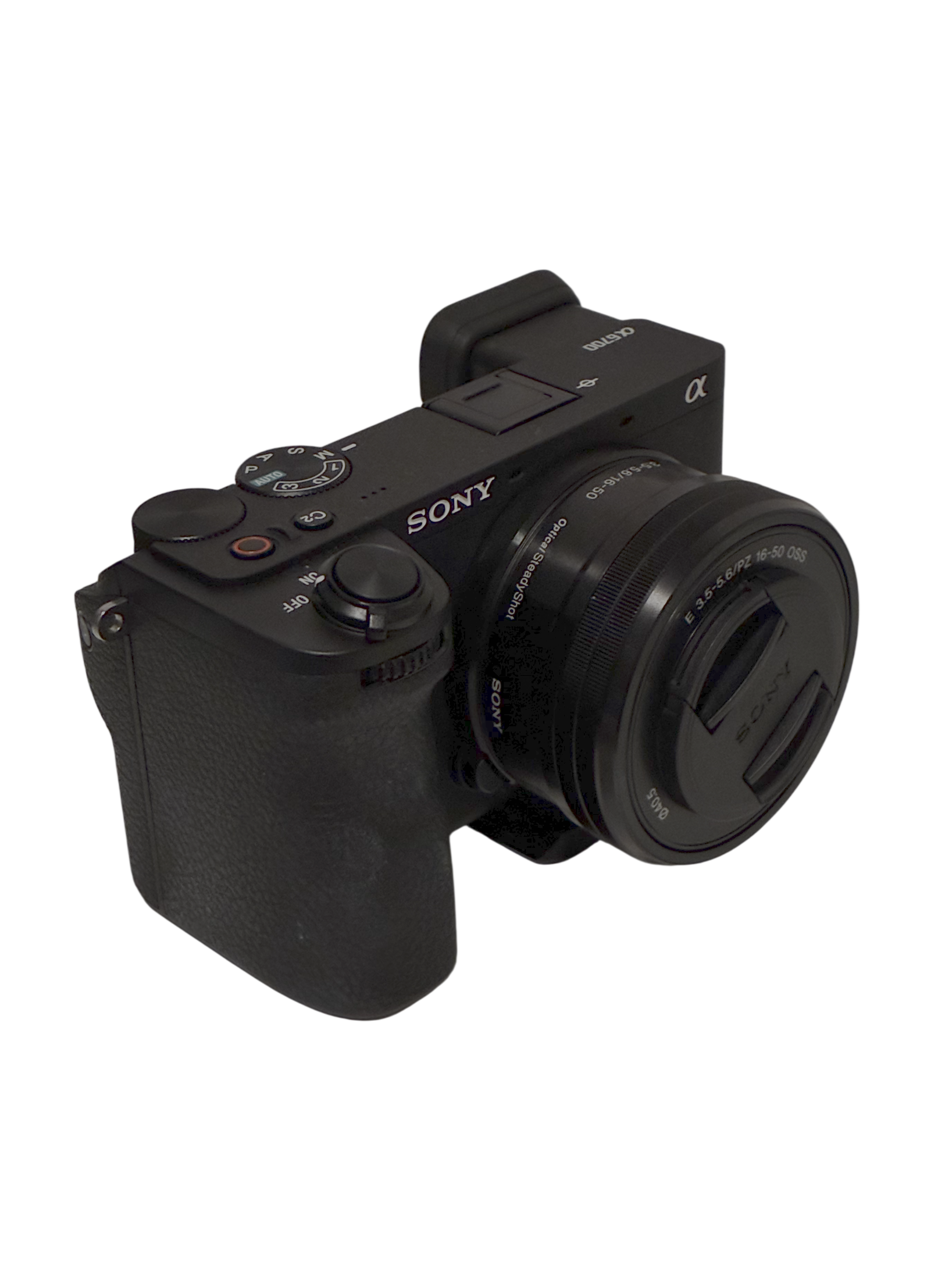
Before buying my Sony a6700, I spent weeks going back and forth in my head trying to justify the cost. To some people, buying a camera might seem unnecessary or overly expensive, especially when smartphones today already take decent photos and videos.

But the more I thought about it, the more I realized this wasn’t just another impulsive purchase.

It was an investment.

Not just in a camera, but in a skill, a hobby, and a creative outlet I genuinely care about.


Investing in something I’ll actually use

I’ve always been drawn to documenting moments.

Whether it’s everyday life, travel, street photography, or capturing things that simply feel worth remembering, I wanted a tool that could grow with me.

Whenever I was outside doing an sport activity, i took my GoPro everywhere.

The Sony a6700 felt like the right balance between:

  • portability
  • strong video performance
  • photography capabilities
  • long-term usability

Rather than buying something temporary, like a point and shoot camera. I wanted something I could learn on and continue using for years.


Expensive doesn’t always mean wasteful

Spending money on hobbies can sometimes feel irresponsible.

There’s always that voice asking:
“Do I really need this?”

But I’ve started thinking differently about purchases like this.

Money spent on things that help you:

  • create
  • learn
  • improve a skill
  • build experiences

isn’t always money wasted.

Sometimes the bigger waste is never starting because you were too afraid to invest in yourself.


More than just gear

With this camera, I want to:

  • improve my photography skills
  • document everyday life more intentionally
  • experiment with visual storytelling
  • capture moments I’d otherwise forget

A camera doesn’t magically make someone creative, but it can become a tool that pushes you to practice and notice more.

Check out the camera here:
Sony Alpha a6700

Primary Sidebar

Recent Posts

  • I’m exhausted
  • Budgeting Is a Skill Everyone Should Learn
  • I can’t stop scrolling
  • Investing in a Hobby That Matters to Me
  • Hello world!

Archives

  • May 2026
  • April 2026

Categories

  • Personal Growth
  • Photography
  • Uncategorized

Thanks for visiting. Testing Back Home

Copyright © 2026 Jinius Lee | Connect with me